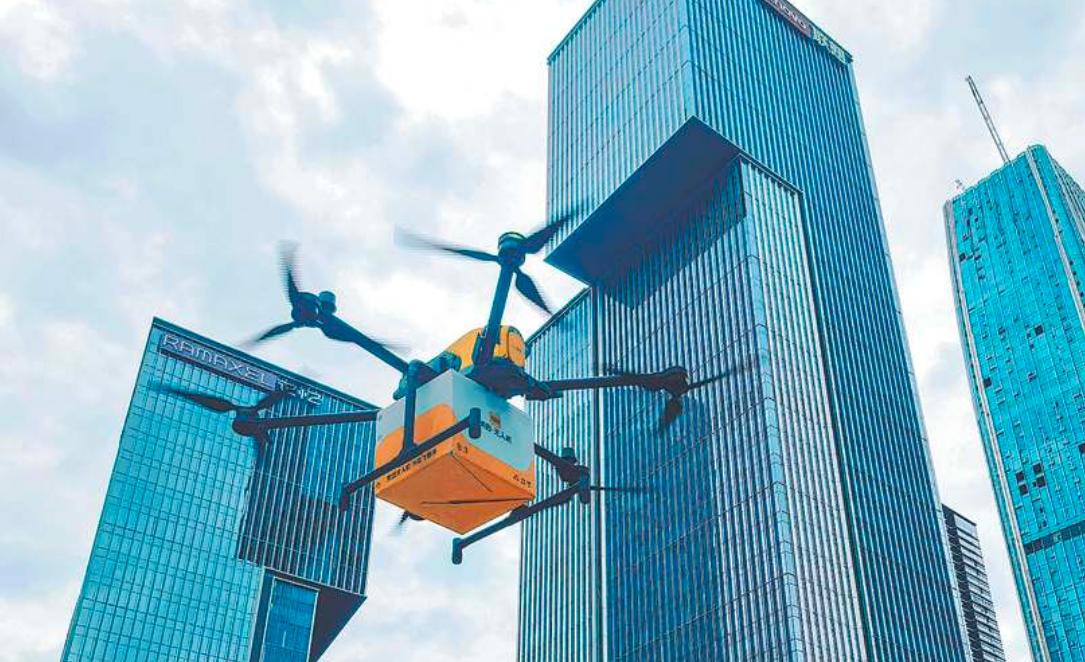
Shenzhen is famous for its futuristic skyline and the technology giants that call it home. But more important is the ease with which an idea can become a product in the city. In Huaqiangbei, the sprawling electronics marketplace at the heart of the city, you can find almost everything an entrepreneur needs, from batteries and electronic components to product designers, precision machining services and logistics providers. The concentration of suppliers and expertise means that an idea can move from the drawing board to a working prototype with remarkable speed. It is the world’s capital of electronics, spewing new products and technologies. A defining feature of Shenzhen’s transformation is that the city has attracted people from across China and around the world, allowing their ambitions and ideas to become part of its development. That spirit of openness and experimentation is also part of the vision President Xi Jinping has laid out for Shenzhen during his tours to the city since 2012. Through those visits, Xi reaffirmed China’s commitment to reform and opening-up, encouraged innovation and charted Shenzhen’s development as a pioneer of high-quality growth.
As Shenzhen prepares to host the Asia-Pacific Economic Cooperation Economic Leaders’ Meeting this week, the city is once again set to showcase China’s economic transformation and its growing connections with the wider world. The scale of that transformation is striking. Shenzhen’s population has grown from 323,900 when it became a Special Economic Zone (SEZ) in 1980 to more than 18.2 million at the end of 2025. Over the same period, its economic output increased from CNY270 million to CNY3.87 trillion.
President Xi first visited Shenzhen in December 2012, his first inspection tour outside Beijing since assuming the post of General Secretary of the Communist Party of China (CPC) and before being appointed President of China in March 2013. He emphasized the importance of respecting the people’s pioneering spirit, encouraging bold experimentation and breaking new ground, while underscoring that reform and opening-up must continue. The message resonated with Shenzhen’s history as a city built by successive generations of newcomers, many of whom arrived with limited resources but were determined to build better lives.
For Gao Feng, Technical Director of Shenzhen Toch Prepress Technology Co, Xi’s emphasis on initiative and a pioneering spirit echoes his own journey from an unskilled migrant worker to an accomplished technician. In 1993, he left his hometown with just CNY300, money his mother had painstakingly saved by raising pigs for two years. After a long-distance bus journey, he arrived in Shenzhen with few skills and little idea of what awaited him. His first job was packing materials at a construction site. The pay was meager, but he soon noticed that skilled workers could earn several times as much. “I firmly believed that learning a technical skill could change my life,” he recalled. Over the following 15 years, Gao passed all five skill levels to become a certified electrician. His technical expertise earned him national honors. Later, he would pass on the skills that had transformed his own life at a training center bearing his name.
When President Xi returned to Shenzhen in October 2018, as China prepared to mark the 40th anniversary of reform and opening-up, the city was confronting a different set of challenges. Having established itself as a major manufacturing and export center, Shenzhen was increasingly seeking to strengthen technological innovation, develop advanced industries and deepen cooperation within the Guangdong-Hong Kong-Macao Greater Bay Area. Xi encouraged Shenzhen to pioneer reforms that could be replicated elsewhere. Two years later, at a city celebration marking the 40th anniversary of its establishment as a Special Economic Zone, Xi reflected on Shenzhen’s transformation from a small border town into an international metropolis, describing its achievements as a miracle created by the Chinese people in the history of world development. He set out six priorities: pursuing high-quality development, deepening reform, expanding opening-up, modernizing urban governance, improving people’s well-being, and advancing the development of the Guangdong-Hong Kong-Macao Greater Bay Area. Innovation featured prominently in his speech. Xi also called for greater investment in basic and applied research, closer integration of industrial and innovation chains, and the development of emerging and future industries, with the aim of building Shenzhen into a globally influential hub for technological and industrial innovation.
Today, the extensive manufacturing ecosystem that helped establish Shenzhen’s reputation is attracting a new generation of international entrepreneurs. Saudi Arabian entrepreneur Dalia Khoja has found opportunities to connect directly with engineers, designers and suppliers as she pursues product development involving artificial intelligence. “Here, you can just design it and then order it and you will receive it,” she said, explaining that some products can be delivered within two to four days, the China Daily reports.