In October 2019, Donald Trump’s administration accused SenseTime, a Chinese face recognition company, of being an enabler of human rights abuses against Muslim Uyghurs in Xinjiang, and last December, the U.S. banned American funds from investing in SenseTime, in an escalation that forced the company to postpone the pricing of its stock sale in Hong Kong. But this has not deterred SenseTime. ‘‘Technology should be the global goal that we pursue for our collective future for all of humanity,” said SenseTime CEO Xu Li, who received a doctorate in computer science from the Chinese University of Hong Kong (CUHK) before co-founding SenseTime. “It is regrettable that we are caught in the middle of geopolitical tension.”
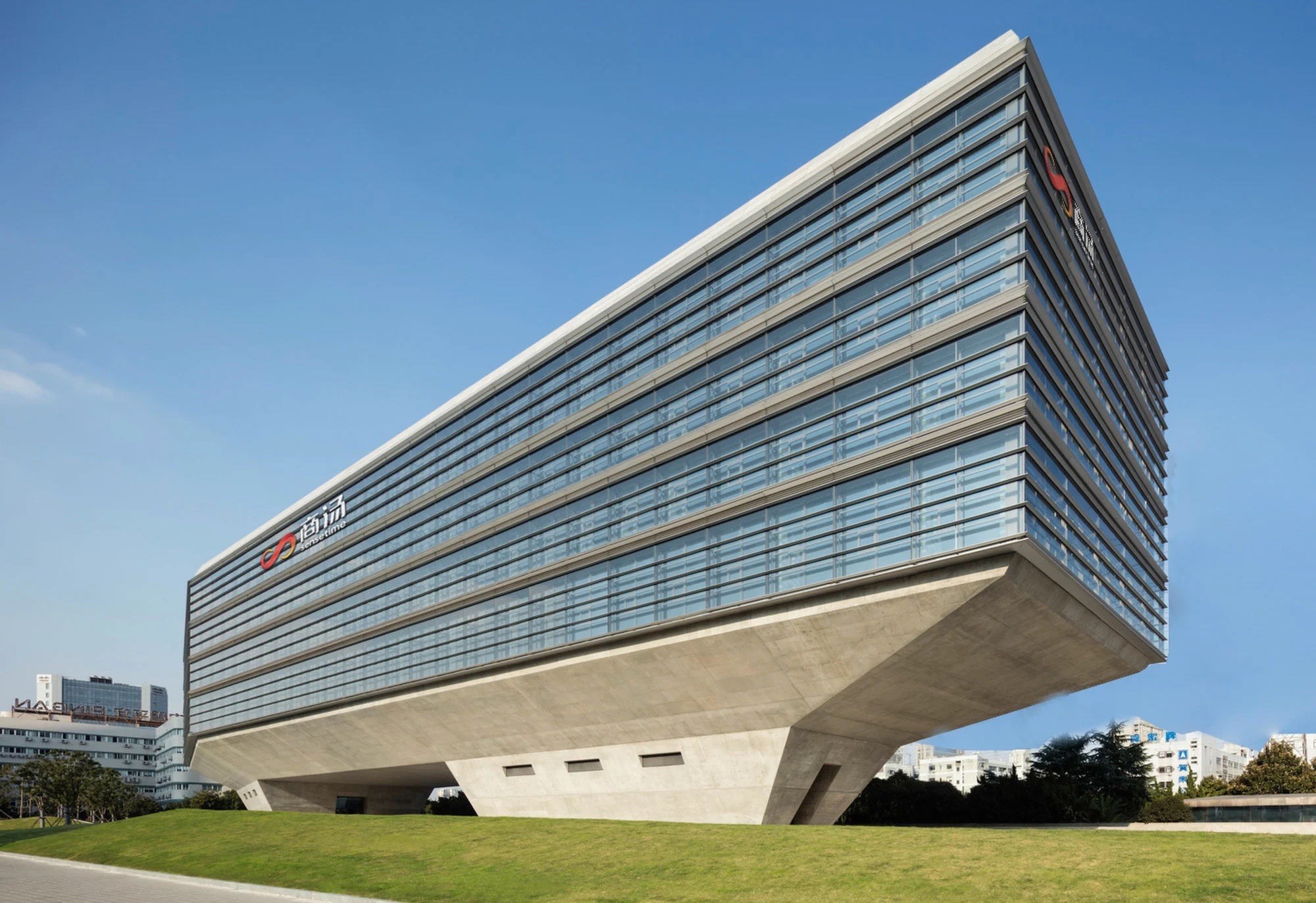
The White House placed SenseTime on a list of “Chinese military-industrial complex companies,” holding the Hong Kong-based start-up responsible for “human rights abuse enabled by the malign use of technology,” according to Deputy Secretary of the Treasury Wally Adeyemo. SenseTime rejected the accusation, but it was forced to delay its IPO. The sanction “gave us some trouble, but it did not take long before the management decided to proceed with the listing,” Xu said in Shanghai’s Caohejing, where facial recognition unlocks most doors throughout the seven-story building that houses 1,400 staff including engineers and computer scientists. On December 20, SenseTime relaunched its Hong Kong IPO and raised HKD6.64 billion in line with its original fundraising target, albeit without U.S. investors, some of whom were among the company’s earliest funders, including IDG Capital, Qualcomm, Fidelity and Silverlake.
SenseTime’s shares started trading on December 30, three weeks after the U.S. sanctions. It turned Xu into a multimillionaire at the age of 40, with 3.8% of the HKD93 billion. Xu and his co-founder Tang Xiao’ou pushed ahead with the listing to “set an example”, showing that Hong Kong remained safe for fundraising amid the geopolitical tumult. “If we withdrew the listing, other sanctioned technology players would not be able to use this channel to list,” Xu said. “It would also hit Hong Kong’s status as an international fundraising platform.” The group of founders, mostly alumni of the CUHK’s information engineering school under Tang’s mentorship, believe that technology should be left out of geopolitics, and be used instead by humanity as a force for good to improve people’s lives. “The global productivity slowdown is affecting the world’s economies,” Xu said. “New technology is the key driver for breakthroughs in productivity, and hence future growth patterns.”
Tang, Professor at the CUHK’s Department of Information Engineering, is SenseTime’s largest single shareholder, with a 26% bloc that gives him 70% of the voting rights of the company, founded in 2014. SenseTime first made its name in 2015 when it developed a facial recognition algorithm that was 99.55% accurate, beating the human eye’s 97.5%. It is now Asia’s largest AI software provider, and China’s biggest provider of computer vision applications, with a 22% share of the industry, according to IDC’s June report.
Revenue comes from one of four major businesses: AI-powered solutions for city and traffic management for local authorities, mainly in China. Shanghai’s Changning district began using AI in its road management system in 2020, using 1,000 cameras as sensors for detecting illegal parking, flooding and other problems using algorithms. SenseTime’s AI is also deployed in the digitalization of companies in finance, real estate and property management. Two applications are growth areas for SenseTime’s AI: image processing on smartphones, metaverse-related applications and driver-assistance and autonomous driving systems in smart cars. The augmented reality (AR) content on Bilibili’s live videos, including personalized avatars and the digital world for users to interact with virtual live-streamers were all enabled by SenseTime’s AI. It served over 2,400 customers from big companies such as China Mobile, Honda Motors, 140 city governments, and Alibaba Group Holding, a pre-IPO investor in SenseTime.
“Our mission is to advance the interconnection of the physical and digital worlds with artificial intelligence, driving sustainable productivity growth and seamless interactive experiences,” Xu said. “When the digital world becomes more like the physical world, technology can be better applied in many industries and that will lead to productivity breakthroughs.” Advanced Digital Humans can acquire knowledge rapidly from various scenarios with the learning capabilities of artificial intelligence to become spontaneous experts of specific fields, according to the future sketched by SenseTime’s white paper in May. Those digital humans can already be seen at the AEON Mall in Guangzhou in the guise of a shopping guide, and as an AI bot handling customers’ queries at the Shanghai branch of the Bank of Ningbo.
“Most people agree that AI is good for industries, but the cost is too high,” Xu said. “If you tell a company’s boss that the AI-powered technology can help his investment break even in 50 years, he will prefer to use manpower.”
The surging popularity of electric vehicles has offered SenseTime a game-changing break, as its AI can be applied in smart driving, intelligent cockpits and autonomous driving. With three of every five new cars on China’s roads expected to be battery-powered by 2030, SenseTime is aiming to install its AI in as many as 25 million cars over the next few years, Xu said. SenseTime spent CNY2.45 billion on research in 2020, more than double the budget of the Beijing-based facial recognition company Megvii – sanctioned by the Trump administration in 2019 – and making it the largest spender among China’s AI software developers. SenseTime’s revenue may grow 37% to about CNY8.82 billion next year, from CNY3.45 billion in 2020, driven by more AI applications, expanding coverage among customers and cities, the South China Morning Post reports.