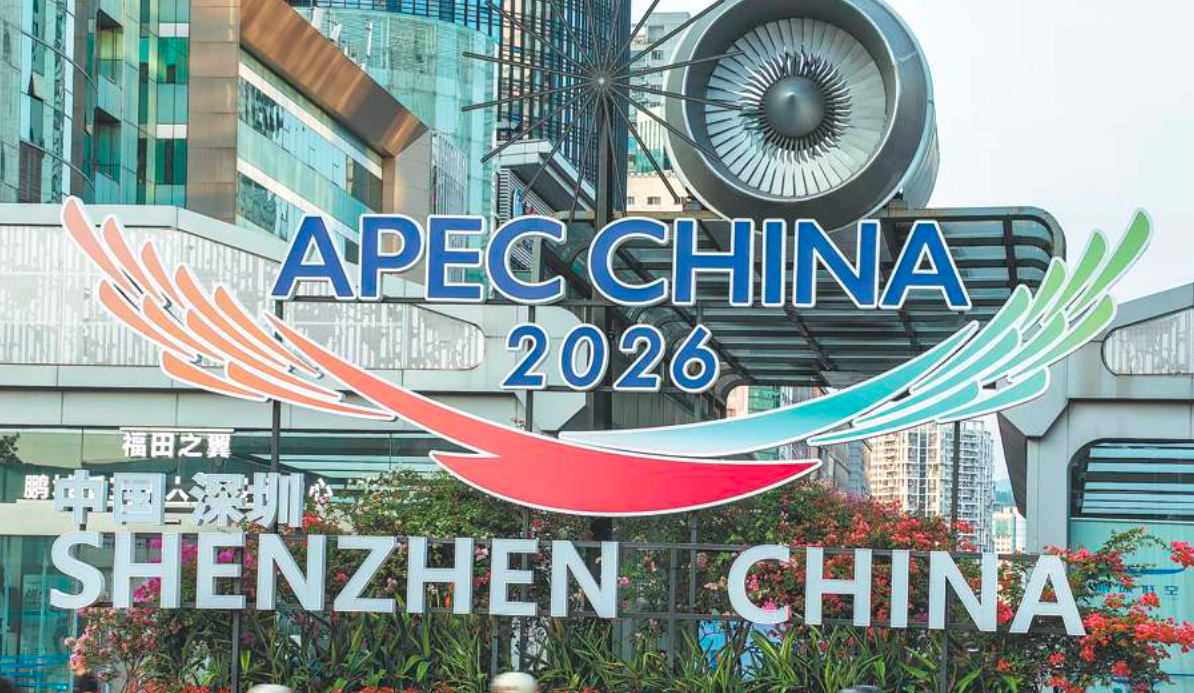
The Asia-Pacific Economic Cooperation (APEC) meeting was held in Shenzhen, attended by world leaders including U.S. President Donald Trump and Russian President Vladimir Putin, and hosted by Chinese President Xi Jinping. The three presidents also held an unprecedented separate trilateral meeting. President Xi personally welcomed Donald Trump at Shenzhen Bao’an International Airport. It was the first time in nearly seven decades that China’s top leader had welcomed a visiting foreign head of state at an airport.
In his opening speech to the CEO summit, Xi called for cooperation and innovation to bring prosperity to the Asia-Pacific region to weather the turbulent world at a time when “global growth lacks momentum, and unilateralism and protectionism are rampant”. He also assured world leaders that China would continue to open up, positioning the country as a “supersize market” and “a promised land of development” for the global business community through innovation.
“China will not only cut tariffs and expand market access but also go a step further – we will carry out reform in challenging areas, such as rules, regulations and standards, in order to fully ensure market access and an accommodating operating environment in the manufacturing sector, to steadily expand opening up in the service sector, and to foster a more stable and more predictable first-class environment for companies from around the world to invest and do business in China,” Xi said. He added that China would support the establishment of a World Association for Bay Area Economic Cooperation “to deepen exchanges among bay areas from across the world”. “Shenzhen’s story is a microcosm of China’s reform and opening-up,” Xi said in his toast to the guests, adding that the city’s development was “a successful example of Asia-Pacific cooperation”.
The meeting of the three presidents was historic because it was the first time this took place, but did not lead to substantial agreements. The joint pledge to reduce nuclear risk sends a positive signal on stability, analysts say, although they warn that there is little room for optimism without concrete measures. “The contrast between President Trump’s stated ambition to negotiate a new arms control treaty and the declaration’s lack of substance could hardly be starker,” said Zhao Tong, Senior Fellow at the Carnegie Endowment for International Peace, adding that the declaration “fell far short of expectations”. The joint statement focused on United Nations reform, nuclear risk reduction, global energy supplies and the jurisdiction of international courts.
The three leaders added that a nuclear war “cannot be won and must never be fought”, even as Xi urged Washington to “do the right thing” on Taiwan and Trump called for greater Chinese cooperation on agriculture, energy and artificial intelligence (AI). Countries should abandon the “Cold War mentality” and enhance economic and trade cooperation rather than pursue decoupling, Xi said. “Global energy security faces severe challenges, and the three nations can strengthen communication to safeguard the stability of energy supply chains.”
Chilean President Jose Antonio Kast, Malaysian Prime Minister Anwar Ibrahim and representatives of 115 Fortune Global 500 companies attended the APEC CEO Summit 2026. Describing Asia-Pacific business communities as “pioneers of the global economy”, Xi encouraged business leaders to take an active part in China’s reform and opening up and to “share in the opportunities created by Chinese modernization”. Xi said that China, the world’s second-largest consumer market, offers businesses new opportunities in areas ranging from new energy vehicles to smart homes and from goods and services for older consumers to winter tourism. As China accelerates the development of a big, open market and increases imports of quality products and services, more diverse demand will be unleashed, he said.
President Xi also said that China will continue to host the “Export to China” events to open efficient channels to help quality products from across the world enter the Chinese market. China is a supersized innovation testing ground where frontier technologies are tested, improved and upgraded in real-world scenarios and are then turned into high-quality growth drivers, Xi said. He pointed to robots at work in factories and on farms, autonomous driving and drone delivery as examples of how companies are putting new technologies to use.
“No matter how the international landscape may evolve, China will not waver in its pursuit of win-win cooperation with all other countries,” he said. China will will allow full manufacturing access with an accommodating business climate and steadily expand opening-up in the services sector, he said. For Annette Gregg, CEO of the World Trade Centers Association, the message from Xi’s speech to companies is clear. “If you want to do business with China, China is open to you and ready for your business,” she said. Gregg said that China’s advances in robotics, artificial intelligence and green technology hold particular appeal for the United States market.
The two-day CEO summit launched the Shenzhen Initiative, the first time in its 30-year history that it has published an initiative. China is hosting APEC for the third time, having previously hosted the leaders’ meeting in Shanghai in 2001 and Beijing in 2014.
This overview is based on reports by the China Daily, Global Times and South China Morning Post.