China’s beer market is no longer growing through simple volume expansion. Instead, the sector is entering a new phase where companies are competing for market share through premium products, stronger brands and more targeted consumer occasions. In the first half of 2026, leading brewers, including China Resources Beer and Yanjing Beer, delivered broad-based growth, driven by premium beers and the rise of higher price segments. Beer output among enterprises above designated size (with an annual revenue above CNY20 million) reached 19.36 million kiloliters from January to June, up 0.2% year-on-year. The performance highlighted a widening gap between domestic and international brewers. While local players gained momentum by strengthening their mid-to-high-end offerings, foreign brands such as Budweiser APAC continued to struggle with shifting consumer habits and weaker demand in traditional premium channels.
China Resources Beer, the country’s largest brewer by sales volume, reported first-half beer sales volume growth of 1.7%, with beer revenue rising 2.2% and profit increasing 1.2%. Overall revenue reached CNY24.24 billion, up 1.2% year-on-year. Average selling prices increased 0.5%, while profit from the beer segment continued to grow when excluding one-off items. Growth was mainly driven by sub-premium and premium products. Brands including Heineken and Amstel continued to gain consumer recognition, with sales volume in China Resources Beer’s sub-premium segment rising 10% year-on-year. The company’s performance reflects a broader industry trend: Chinese consumers are not simply drinking less beer, but are becoming more selective about what they drink and where they consume it.
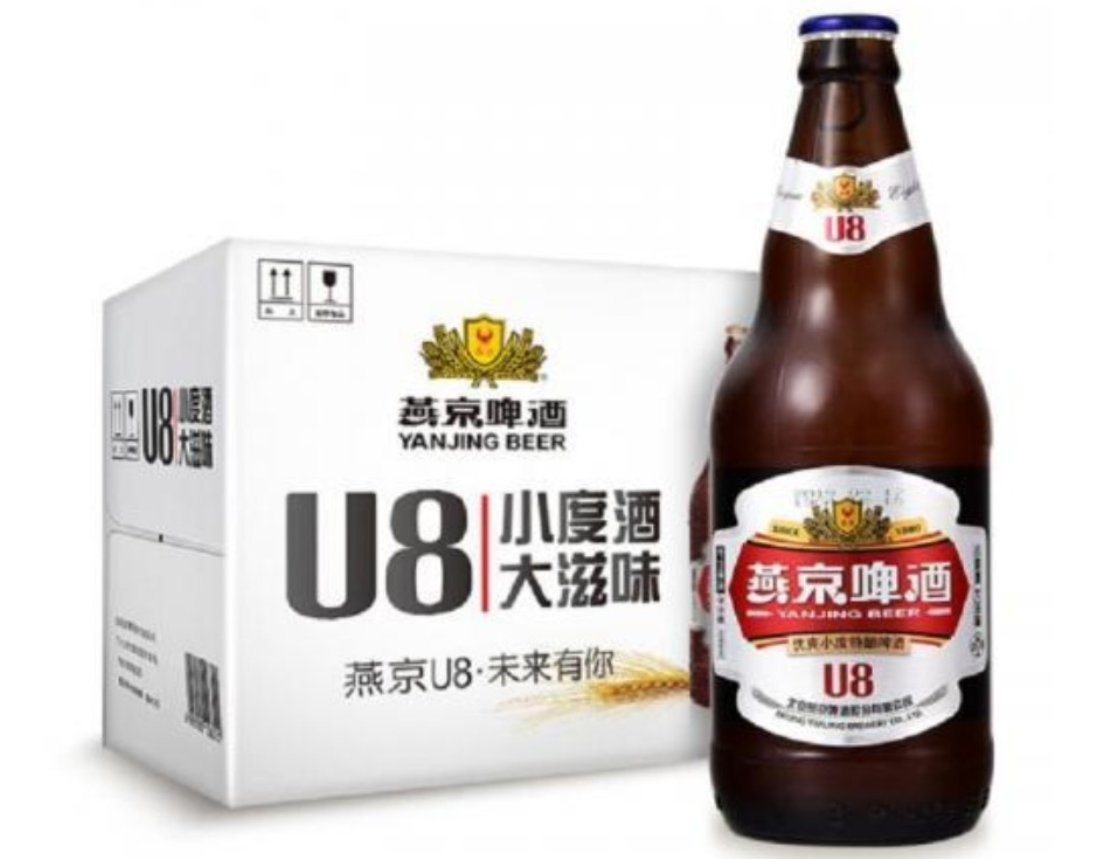
Yanjing Beer emerged as one of the strongest performers among China’s major brewers. In the first half, the Beijing-based company reported volume growth of 3.2%, revenue growth of 5.5% and net profit growth of 26.9%. Its flagship U8 product remained the key growth engine. Sales volume of U8 exceeded 614,100 kiloliters during the period, surging more than 25% year-on-year. The success of U8 helped Yanjing strengthen its position in the CNY8 price segment and overtake Chongqing Beer to become China’s fourth-largest brewer. The company’s rise demonstrates the growing importance of the “new mass market” – products positioned above traditional mainstream beers but below premium imported brands. The CNY8-10 price range has become one of the most competitive battlefields in the beer industry.
Pearl River Beer also benefited from this trend. The company’s premium segment, centered around the CNY8 price point, recorded an 8.16% increase in sales volume, with gross margins reaching 58.1%. Meanwhile, other domestic players including Tsingtao Beer and Kingstar Beer maintained relatively stable performance, Five years ago, the beer market was dominated by five major players: China Resources Snow, Budweiser, Tsingtao Beer, Yanjing Beer and Carlsberg. Today, these companies still control more than 90% of the market, but their competitive ranking has evolved. Tsingtao has overtaken Budweiser in recent years, while China Resources Beer and Tsingtao have continued expanding across price segments. Foreign brands have gradually lost momentum. Industry estimates suggest Budweiser and Carlsberg have collectively lost more than 5% of market share over the past five years.
The shift reflects a deeper transformation of the beer industry. Competition is moving away from a period of rapid market expansion toward a mature, zero-sum battle where large domestic companies increasingly compete directly against global giants. Budweiser APAC, once the symbol of the country’s premium beer boom, delivered mixed results in the first half as weakness in its China business continued to weigh on growth. The company reported first-half revenue of USD3.17 billion, down 1.4% year-on-year, while net profit increased 15.6% to USD473 million. Global sales volume declined 2.2% to 4.26 billion liters. First-half sales volume in China dropped 6%, while revenue declined 6.4%. In the second quarter, the decline accelerated, with China volume and revenue falling 9.7%.
Budweiser APAC attributed the weakness to unfavorable weather conditions and continued softness in restaurants, nightlife venues and entertainment businesses. The company has attempted to offset pressure by expanding into off-trade and online-to-offline channels. Budweiser said its O2O business achieved double-digit growth in both the second quarter and first half, supported by brand investments and packaging innovation. Growth has shifted toward home consumption, casual dining and everyday occasions – areas where domestic brands have stronger distribution networks.
At the same time, domestic companies are increasingly moving upward. China Resources Beer has used its national distribution network after acquiring Heineken’s China business to accelerate premium expansion. Yanjing’s U8 has successfully captured consumers trading up from mainstream beers, creating pressure on Budweiser’s traditional customer base. Beyond premium beers, another growth opportunity is emerging in healthier beer categories. Zero-sugar, low-calorie and non- alcoholic beers are gaining traction as younger consumers become more health-conscious, the China Daily reports.