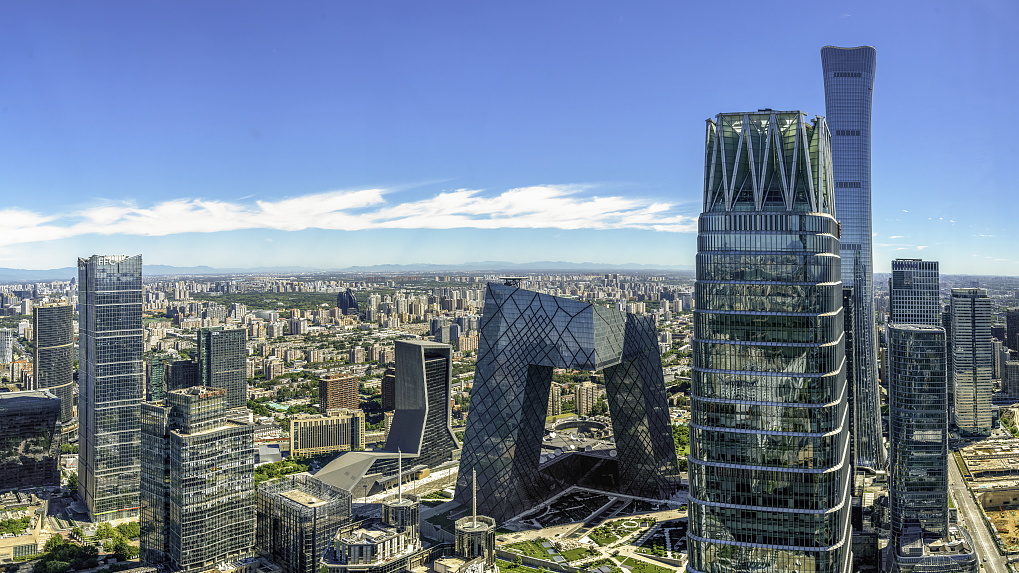
Beijing’s office market is reeling from the departure of large state-owned enterprises (SOEs) and tech giants from the city center, causing rents to decline as much as 30% from a year ago. The slump is likely to persist, as the relocation of large office occupiers, aimed at reducing Beijing’s “non-core” functions, has freed up significant commercial real estate, analysts say. As a result, Beijing’s overall office vacancy rate has reached the highest level among China’s first-tier cities, hitting nearly 18% in the second quarter of 2024, according to a report by the China Real Estate Information Corp (CRIC). Rents fell by 3.7% quarter-on-quarter to CNY9.23 per square meter per day.
“Office rents in the central business district (CBD) have declined by 20% to 30% from a year ago because the economy is bad, foreign-owned businesses are leaving, and businesses are generally struggling to stay afloat,” said Beijing-based real estate agent Ma Xiaoyu. Landlords of office towers in the CBD experienced a surge in vacant spaces as major SOEs, like Sinochem Holdings and China Huaneng Group, have moved their headquarters to the Xiong'an New Area, located about 100 km southwest of the capital. “Landlords are now offering substantial rent discounts and generous rent-free periods to retain tenants and fill the rising number of vacant spaces,” Ma said. “Since developers do not want their listing prices to appear too low, they are waiving rents for a few months to effectively lower the cost for tenants.”
Leading tech firms have also been moving their offices out of the city, further increasing vacancy rates. For example, Alibaba Group Holding recently relocated its Beijing headquarters to an industrial estate 22.5 km outside the city center, vacating more than 150,000 sq m of office space in the Wangjing area. As a result, the Wangjing and Jiuxianqiao areas in northeast Beijing, home to several major Chinese and international conglomerates, saw their vacancy rates jump by 2.2 percentage points quarter-on-quarter to 24.5% in the three months to June, the highest in the city. Samsung Tower, a 62-story building in the CBD which has seen its vacancy rate rise to nearly 20%, has reduced rents to CNY7.4 per sq m per day, 18.7% below the area’s average of CNY9.1 per sq m per day. The tower, which houses the China headquarters of the namesake South Korean conglomerate, is also offering nine months of rent-free tenancy, far exceeding the three to four months granted by its peers in the CBD in the hope of attracting tenants to fill 8,600 sq m of vacant space. “The primary focus of competition among landlords is still pricing, as tenants are highly sensitive to rent levels in the current environment,” said Lu Ming, Research Director at Colliers North China. “When vacancy rates remain elevated at over 20%, it is challenging for rents to bottom out or stabilize,” he said. “The market still needs more time and patience for a recovery on the demand side.”
The relocation of SOEs from Beijing to the Xiong'an New Area, aimed at reducing the city’s “non-core” functions, has raised the area’s profile. The smart city was established in 2017 in Hebei province to accommodate big SOEs and serve as a nexus connecting the capital and nearby economies. As of March this year, four SOEs, including Sinochem Holdings and China Huaneng Group, have registered their headquarters in Xiong'an. Other state-backed conglomerates, including China Three Gorges Corp and China Electronics Corp, have also moved their headquarters outside Beijing in recent years in response to the state-led relocation push. “Beijing is traditionally a hub for government affairs and the headquarters of most state-owned firms, but that’s starting to change now,” said Yan Yuejin, Director of the E-house China Research and Development Institute. “Therefore, Beijing’s property market cannot be viewed solely from an economic perspective. You’ll have to factor in policy and politics as well.”
In the first half of 2024, leasing activity in Beijing’s office segment has improved from the same period last year, but it still fell short of anticipated recovery levels, according to Mi Yang, Research Manager for JLL North China. “Citywide rents are expected to further decline in the second half of 2024, while the vacancy rate in the grade A market is expected to remain stable,” said Mi, noting that a batch of leases are set to expire this year, which could potentially introduce demand to the market. However, as China’s economic recovery remains on shaky ground and the office market still faces challenges, landlords will be prompted to offer more favorable terms to retain tenants. “As rents persistently decrease, the price gap between various sub-markets and asset types is expected to narrow, intensifying competition across these categories” said Colliers’ Lu, as reported by the South China Morning Post.