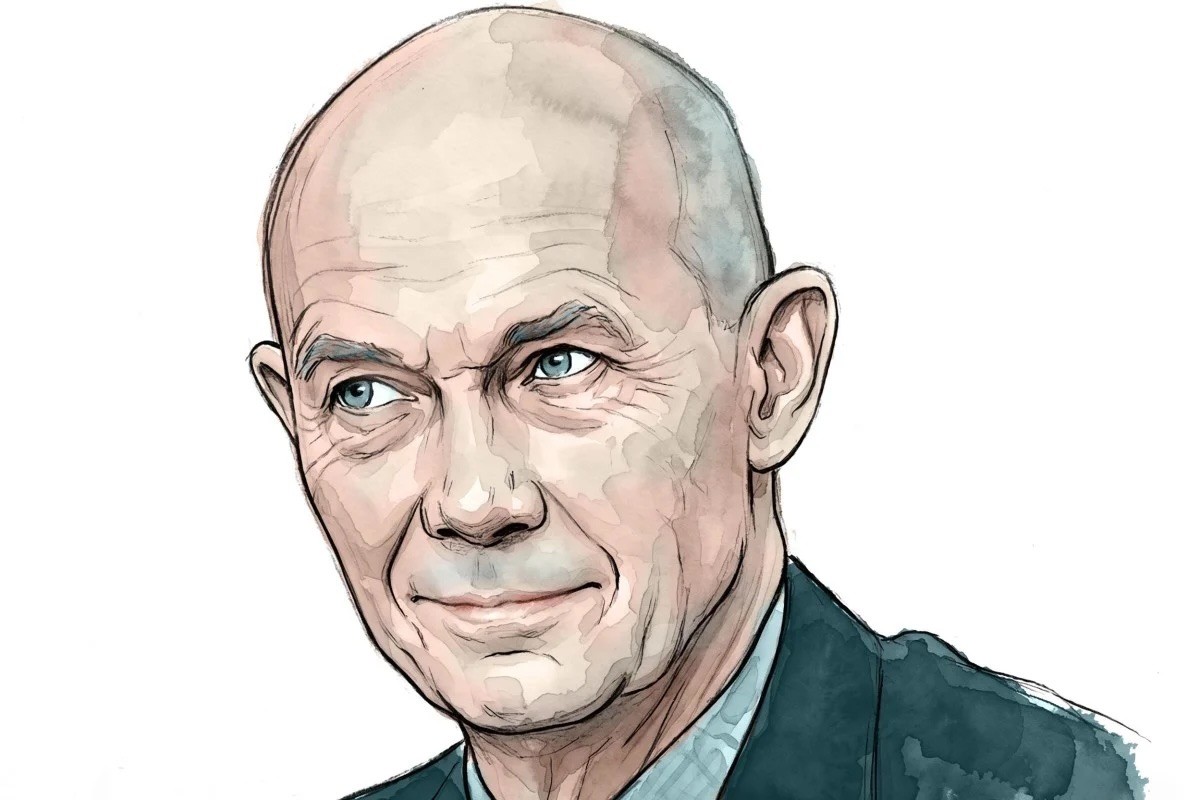
Pascal Lamy, former Director General of the World Trade Organization (WTO) from 2005 to 2013 said in a wide-ranging interview with the South China Morning Post that the EU had two choices in its China trade policy: either rebalance or go protectionist. He said that the Chinese authorities’ lack of interest in addressing structural macro-economic imbalance was a ‘huge problem’ for the European Union. He added that free trade was not dead, but that he never used the expression because it was misleading. “Trade is never free. It is either more or less open. Free trade is not dead, it was never born.”
“The question is whether the move to open trade and an increasing volume of international trade is still continuing. If you look at the numbers, trade is still growing in volume. This means that trade is more open than it used to be. But there is a catch: the growth of international trade, at least benchmarked against the growth of the economy, has slowed, Pascal Lamy said.”
“The slowdown can be attributed to many reasons. Starting with the main factor, which is the fragmentation of production systems that has led to the global supply chains that now span the world. The expansion of the supply chain and the fragmentation of production has limits. It is efficient and productive at some stage, for some products in some conditions. But we’ve probably reached a stage where the efficiency gains stemming from the multi-localization of production systems are slowing, with decreasing yields, like any productivity curve. At some stage you reach a level where economies of scale are less important than at the beginning of the process.
Reason No 2 is that trade openness trends are now counterbalanced by trade-restricting attitudes among a number of international trade players, given the United States’ position and the huge growth of China’s exports and surplus. There are also growing reactions in some places to the expansion of international trade for social or environmental reasons.”
As Europeans, we have three problems in global trade today, Pascal Lamy continued. “A small one, a medium-sized one and a big one. The small one is the U.S. The U.S. has embarked on a protectionist crusade, which stems from the deep belief by U.S. President Donald Trump that tariffs are the Swiss army knife of the 21st century economy, which is not so. The ones who pay the price for that at the end of the day are U.S. consumers. But even if he makes a lot of noise about his attempt to de-globalize the planet, this will not happen.”
“Then we have the medium-sized problem, which is that the World Trade Organization, the international institutional engine for opening trade, is not working in the way it used to work. This is mainly a problem of organization. The fact that the U.S. de facto left the WTO. The fact that although a new dispute-settlement system has replaced the previous one, it does not work with the U.S.. The fact that all decisions, including on minor issues, are still taken by consensus, and that the secretariat is not allowed to exercise its potential authority based on its first-class expertise. And the third one, in my view, is the main reason. The WTO has not been able to develop new trade-opening agreements in areas where international trade has moved a lot – digital trade for instance, which matters a lot for services – and we should always remember that international trade is goods plus services, plus the invisible part of international exchange trade today, which is about trillions of pieces of data.”
“Then we have a big problem, which is China, which is a problem for every country. It’s a huge problem for us Europeans because we have a mega trade deficit, growing in an unsustainable way. And for the European Union, addressing this problem is a very tough task. The main reason behind it is the macroeconomic imbalance of China, which is structural, which Chinese authorities have not addressed, do not want to address, although they’ve been saying for many years that Chinese growth should be rebalanced – with more domestic consumption. It is not happening, and we are in a situation where industry in China produces twice as much as it consumes in industrial goods, hence the debate about overcapacity. China now has comparative advantages in most of the supply chains in manufacturing. Not yet in agriculture, and not yet in services. But I believe China wants to get there, following a policy developed by the Chinese government, mostly since 2010. China already has plans to make itself self-sufficient in food – why not in services too later? Because of the strategic concept that China has to become more self-reliant. In energy, in manufacturing, in technology, China has, so far, been formidably efficient in constructing self-sufficiency; other sectors will come.”
“This is a major systemic problem, because trade opening has always been based on the theory of comparative advantage. I do something better than you do. You do something better than I do. We have a rational interest to trade, which is, by the way, the philosophical basement of the WTO. The WTO is built with the mission of promoting open trade because opening trade is a good way to create growth and welfare, because it is based on the efficiencies stemming from the exchange of comparative advantage, the international division of labor. This game seems to be over with China today. China has gained comparative advantages all along the industrial production chain for various reasons. Some of which are legitimate. They have a huge market. They have a formidable education capacity, and this is something where they have built their own comparative advantage, and they have a political regime that allows a level of strategization, coordination, multilayered intervention, which is incredibly efficient. This has a lot to do with the political regime, and this is something, of course, that we Europeans would hesitate to emulate for a variety of reasons. China also uses its state-owned sector, its state-owned banks, its budget to heavily subsidize sectors – which is not in the spirit of a fair international division of labor – benefiting from the fact that WTO disciplines on subsidies, state support and state ownership, have remained very weak.”
“This is the situation we Europeans now have to face. It’s not just a bit different from what it was before, where maybe we could adjust the recipes here and there with a bit more or a bit less of anti-dumping or countervailing duties. The size of the deficit is now out of reach of the normal instruments which the WTO provides to regulate trade and absorb import shocks. With China trade dynamics, we are entering a new world, a new paradigm, which opens a lot of questions about WTO disciplines.”
“We Europeans are reaching a moment of truth with trade and China. Either we can convince China to rebalance the system and decrease its exports or we will have to go protectionist. Let’s test the willingness of China to seriously address the problem. This is the first option and in my view, the good option, provided China shows signals that it is ready to address the problem. This is Plan A. We need a Plan A, but we also need a Plan B,” Pascal Lamy told the South China Morning Post.