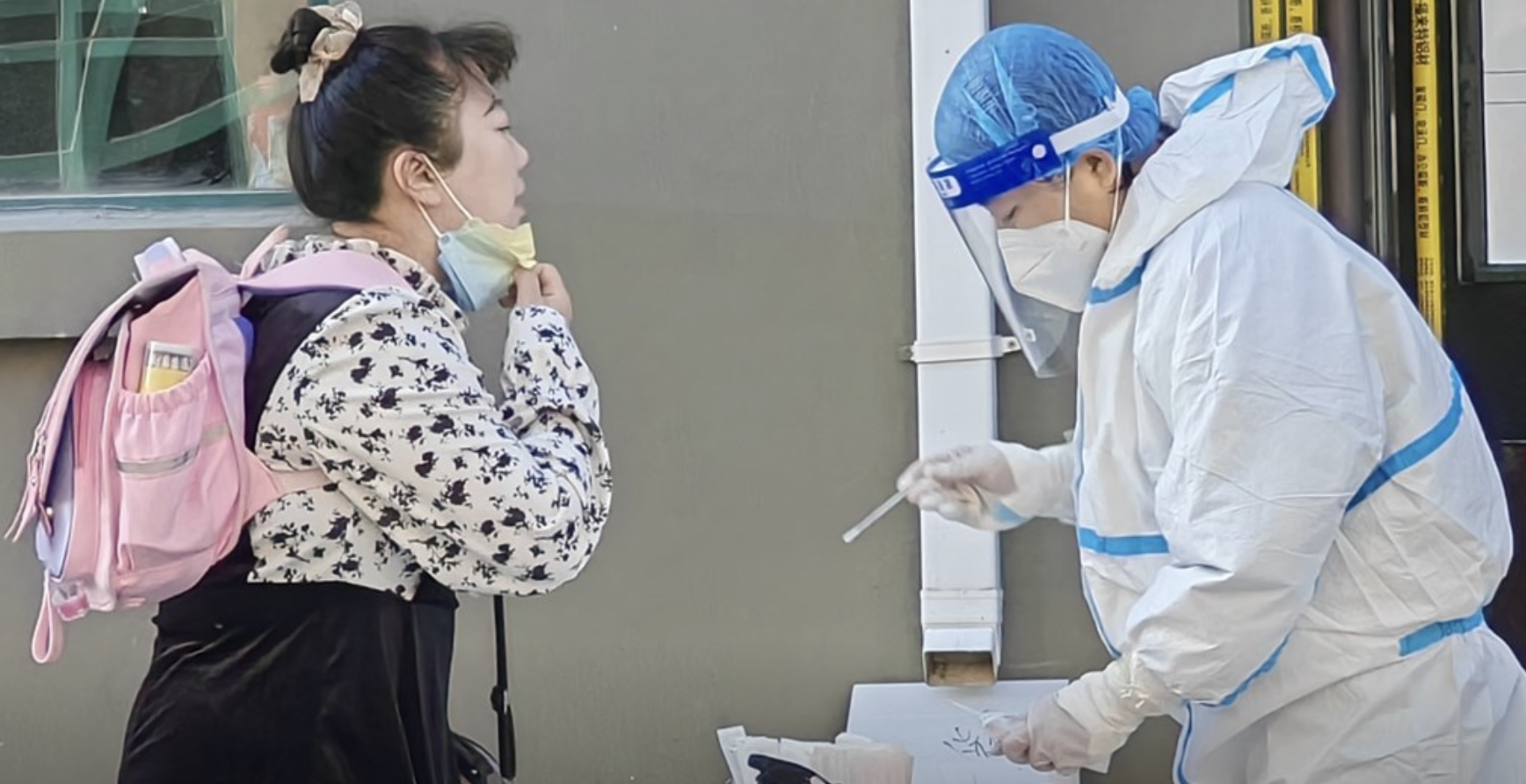
Hong Kong authorities announced that the Covid-19 hotel quarantine policy is scrapped for all arrivals from September 26. Arriving passengers will only need to watch their health at home or at a hotel. They will be allowed to go to work or school, but will not be allowed to enter bars or restaurants during the three-day period, until they get a negative nucleic acid test result on the third day. The required pre-flight nucleic acid testing for inbound visitors will also be replaced by rapid antigen tests. In addition, unvaccinated overseas Hong Kong residents will be allowed to take flights to Hong Kong, while the Come2hk and Return2hk programs will be expanded to the entire Chinese mainland and Macao Special Administrative Region with no quotas.
Upon arrival, passengers will receive an amber code for the next three days, which will prohibit them from entering places that require vaccine pass checks, such as restaurants, gyms, nightclubs, swimming pools, beauty parlors and salons. Entry to high-risk places including care homes for the elderly and disabled, and designated healthcare premises will also be banned. But they will be allowed to head to work and attend school, as well as visit premises where vaccine pass checks are not mandatory such as shopping centers, department stores and wet markets. The first day of arrival is considered Day 0. Travelers will need to conduct a daily RAT until Day 7 – the eighth day after arrival – in addition to PCR tests on days 2, 4 and 6. After obtaining a negative PCR result from the Day 2 test on the morning of Day 3, the medical surveillance period will end. A self-monitoring period then begins from Day 3 to Day 7 with individuals receiving a blue health code, allowing visits to any premises. Hong Kong still recorded 5,387 new coronavirus infections on September 23, including 156 imported ones, along with 12 deaths. The city’s tally now stands at 1,736,413 cases and 10,099 deaths.
While local and foreign travelers celebrate the scrapping of mandatory hotel quarantine rules in Hong Kong, people from mainland China hoping to travel via the city share little of the excitement. Any traveler arriving in mainland China or Macao is still subjected to a “7 + 3” policy: a week of centralized quarantine followed by three days of home observation. Hong Kong was previously an international travel hub, especially for long-haul flights between mainland China and the rest of the world. While its strict border control policies have deterred travelers in the past two years, the city was still seen as one of the more popular routes for entering and exiting mainland China given the limited flight routes available.
According to the latest numbers from the Hong Kong Tourism Board, 40,083 travelers from mainland China arrived in July, up 535.8% year-on-year, but this is still way below pre-pandemic times. There were nearly 5.2 million mainland arrivals in July 2019. Airlines are expected to increase flights following Hong Kong’s border opening, with Cathay Pacific announcing that 200 pairs of passenger flights will be added to both regional and long-haul destinations in October, meaning those who want to travel to the mainland via Hong Kong could find more routes available. Apart from air travel, there is currently a 1,500-a-day quota – decided by lottery – for Hong Kong arrivals in quarantine facilities in neighboring Shenzhen.
The Chinese Center for Disease Control and Prevention (China CDC) said a second booster is necessary for a safe, long-term exit from the pandemic, confirming the necessity of a fourth shot. It also called on the last 10% of the country's population who have yet to be fully vaccinated to take shots as soon as possible. Whether to roll out a fourth dose has been widely discussed in China. Previously, Chinese experts have said that it is important to know how long immunity from the second booster can last, and how it will benefit the general population, before the fourth dose – the second booster shot – can be rolled out. On August 9 it was reported that more than 1.2 billion people had been fully vaccinated, accounting for 89.96% of the total population. People who had received a booster shot exceeded 821 million. China's strategy of containing the epidemic has spared over 99% of the 1.4 billion Chinese people from exposure and infection with severe cases of Covid-19 and its variants for two and a half years. Though it came with social and economic costs, the strategy earned the country a great deal of time for tools, such as vaccines, to be developed while keeping infection and death from the infectious disease at a low level.
All travelers arriving in Shanghai must take a free Covid-19 PCR test within 24 hours after arrival. The measure will be in force until November 15. They will be allowed to move freely after taking the test and before the results are known. Travelers with a red health code or those who had been to high-risk, locked-down or key domestic regions, will be put under quarantine immediately. People with a yellow code, along with those without a negative PCR test from the past 48 hours, will be taken to the nearest PCR test site to undergo a test immediately. Most of the recent positive cases detected in Shanghai came from other provinces and cities.
This overview is based on reports by the China Daily, Shanghai Daily, Global Times and South China Morning Post.