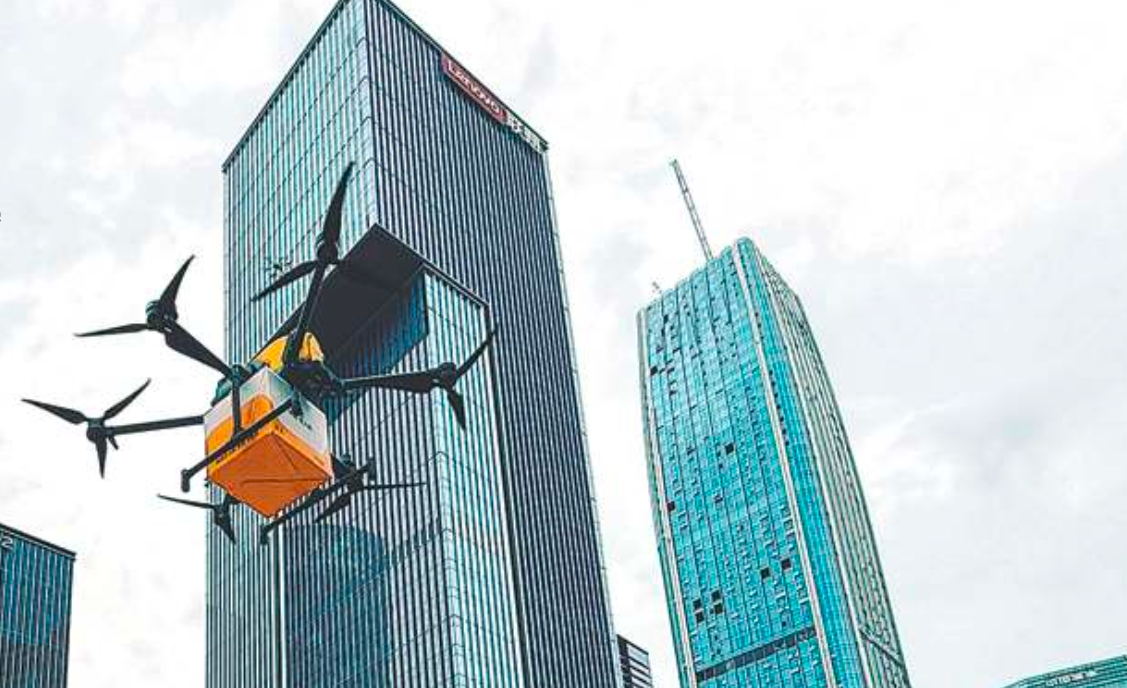
New regulations, breakthroughs in electric vertical takeoff and landing aircraft, expanding manufacturing capacity and growing market demand have pushed the low-altitude economy into the spotlight as a potential driver of new quality productive forces. Yet behind the ambitious trillion-yuan market forecasts and frequent technological milestones lies a fundamental challenge: transforming industrial strength and technological breakthroughs into sustainable commercial operations. China’s revised Civil Aviation Law, which took effect on July 1, 2026, introduced a dedicated chapter on low-altitude economic development, providing a legal foundation for the sector’s expansion. The new framework establishes classified airspace management for low-altitude zones below 300 meters and replaces some case-by-case approval procedures with more streamlined filing mechanisms for qualified flights. The regulatory shift is expected to help move the industry from scattered regional trials toward a more standardized development model.
Along with the evolving regulatory environment, China has made notable progress in manned eVTOL commercialization, although most applications remain at an early demonstration stage. EHang’s EH216-S – a pilotless passenger-carrying aerial vehicle – became the world’s first eVTOL model to obtain type certification, air carrier and production certification from Chinese civil aviation authorities. The aircraft began commercial trials in Hefei, Anhui province, in August, allowing public reservations and flight experiences within designated demonstration zones. The milestone marked one of the earliest attempts globally to move autonomous passenger aircraft toward commercial operation. However, such services are still limited to specific parks and tourism routes rather than serving as a widespread urban air-mobility solution for daily commuting.
Another example is Aridge, formerly known as Xpeng Aeroht, which highlights a different challenge facing the industry: strong manufacturing capabilities but incomplete commercialization conditions. In August, Aridge’s flying car manufacturing base in Guangzhou, Guangdong province, produced its thousandth set of 800-volt high-voltage electric propulsion units, demonstrating China’s growing ability to manufacture key eVTOL components at scale. The company’s modular Land Aircraft Carrier has completed a series of tests, including automatic separation, independent flight, and docking between its ground vehicle and detachable aircraft cabin. It has attracted more than 7,000 global pre-orders and purchase intentions from individual consumers, government and enterprise customers, as well as overseas markets. However, the aircraft has not yet obtained the suitable certificate required for formal manned commercial operations and its planned mass deliveries remain dependent on the completion of airworthiness reviews.
The situation reflects a broader challenge across the industry: technological readiness is advancing faster than regulatory approval and commercial deployment. Industry forecasts nevertheless point to enormous growth potential. According to CCID Consulting, China’s low-altitude economy is expected to surpass CNY1 trillion in market scale in 2026, with the figure projected to reach CNY3.5 trillion by 2035. The consulting firm said there were more than 127,000 companies in China involved in low-altitude-related businesses by the end of June, covering areas ranging from aircraft manufacturing and airspace management to operations and technical services. Industry participants, however, caution that the sector remains in an early development stage.
While China has identified promising growth areas, large-scale commercialization is still constrained by airspace management, digital supervision systems, infrastructure development and business model innovation, said participants at the 2026 China Entrepreneur Future Star Annual Forum held in Guangzhou in July. Executives from aircraft manufacturers, intelligent solution providers and industrial service companies also discussed the opportunities and challenges facing the market at the annual event. Compared with passenger eVTOL services, agricultural, logistics and industrial applications are expected to achieve commercialization sooner, they said. “Agricultural drone operations currently account for the largest share of our civilian business, with mature and large-scale applications already established,” said Meng Yuehua, Director and Deputy General Manager of Gifore, a subsidiary of United Aircraft that specializes in drone R&D, production and service. United Aircraft’s products are also used in emergency rescue, low-altitude logistics and power industry services.
For logistics applications, United Aircraft has developed a product portfolio covering different payload capacities. Lightweight drones carrying about 5 kilograms are mainly used for urban patrols and inspections, while 10-kg-class models can support short-distance delivery services in urban areas, the China Daily reports.