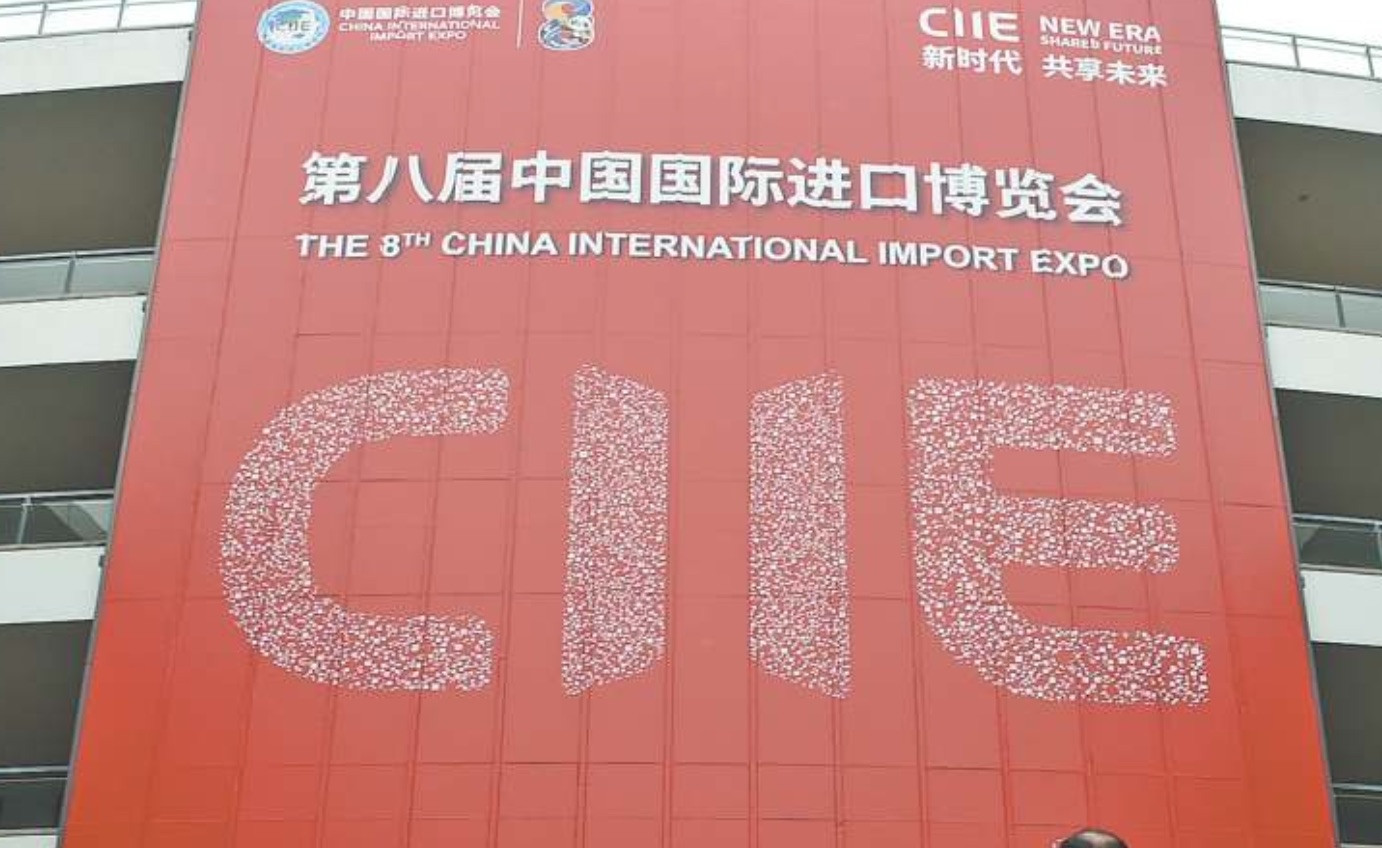
In a global landscape marked by increasing volatility and protectionism, China sent a clear message during the recently-concluded China International Import Expo (CIIE): China offers tremendous opportunities for foreign businesses, grounded in a commitment to even wider openness, executives and experts said. The six-day event, which drew to a close on November 10 in Shanghai, attracted more than 4,000 companies from 155 countries, regions and international organizations with a total of 461 new products, technologies, and services making their debut. The real measure of the Expo’s success, however, lay beyond the exhibition halls in the signed contracts, the deepened cooperation and the reinforced relationships with international partners.
For years, Norwegian salmon has been popular in Chinese kitchens. This year, Norway introduced its king crabs during the eighth edition of the CIIE. It marked the second type of live Norwegian crab, after snow crab last year, to gain access to China. The Norwegian brown crab – often called the king crab – has received the green light to enter the Chinese market. The announcement came from Hanne-Berit Brekken, State Secretary of the Norwegian Ministry of Agriculture and Food, who spoke at the Norway Pavilion of the CIIE. “Norway has always viewed China as one of its most promising and dynamic markets,” said Sigmund Bjorgo, China Director of the Norwegian Seafood Council. “After five consecutive years of participating in the CIIE, China has become Norway’s third-largest seafood export market globally and the fastest-growing in export value.”
In a world of unilateralism and geopolitical rivalry, the CIIE offers a counter-narrative of openness as the path to shared growth, said Zhou Mi, Researcher at the Chinese Academy of International Trade and Economic Cooperation. By leveraging the vast scale and stability of the Chinese market, the Expo provides a crucial platform for businesses worldwide to mitigate international volatility, Zhou added. According to the World Openness Report 2025 released earlier this month, the World Openness Index registered a marginal decline of 0.05% in 2024 compared to the previous year, reflecting drops of 0.34% from 2019 and 5.39% from 2008, respectively. “Global openness remains in a contraction phase,” said Liao Fan, Director of the Chinese Academy of Social Sciences’ Institute of World Economics and Politics. Europe, Central Asia and North America saw a contraction in openness, while emerging markets and developing economies saw their openness index rise 0.42% year-on-year, the report noted. Between 1990 and 2024, China’s openness index surged from 0.59 to 0.76, marking a rise of nearly 30%.
Ron Lin, Founder and President of a honey product company from Canada, said “the United States was originally our major market, but since the tariff hikes, we have suspended most of our orders to the U.S. as the uncertainty there is just too strong. China is proactively opening its door through platforms like the CIIE,” he said, highlighting not only streamlined Customs and logistics services, but also a clear and welcoming attitude he finds lacking elsewhere. In his company’s first appearance at the CIIE in 2024, it selected three flagship honey products for the Chinese market. For this year, it prepared an even wider array of new items to test the waters. “We are full of confidence in the potential of the Chinese market,” Lin stated. “Given its population base, the Chinese market has every possibility of surpassing the U.S. market in the long run.”
The Expo saw intended deals reaching a record USD83.49 billion on an annualized basis, a 4.4% increase from the previous edition, Wu Zhengping, Deputy Director General of the CIIE Bureau, told a news conference. The Expo has long been a showcase for global brands to present their latest products. But for a growing number of multinational firms it has become something more strategic, a launchpad for deep integration into the Chinese economy.
This shift was illustrated on the first day of this year’s Expo, when Porsche opened its China R&D Center in Shanghai’s Hongqiao International Central Business District, designed to accelerate local innovation by merging Porsche’s engineering capability with China’s fast-paced digital ecosystem. “China is leading the way in future mobility, combining electrification, digitalization, and new luxury concepts,” said Oliver Blume, Chairman of the Executive Board of Porsche. “Solving the challenges of this transformation isn’t possible from afar, it has to happen here. The China R&D is a strategic pillar that connects German engineering with China’s digital future. This center will help us move faster, learn more, and strengthen Porsche R&D globally,” Blume said. The same day, pharmaceutical company AstraZeneca also announced an additional USD136 million investment to expand its production and supply base in Qingdao, Shandong province, just months after unveiling a USD2.5 billion plan to establish a global strategic R&D center in Beijing, the China Daily reports.
China saw the registration of 48,921 new foreign-invested firms in the first three quarters of this year, marking a year-on-year increase of 16.2%. From 2021 to 2025, China attracted over USD700 billion in cumulative utilized foreign investment.