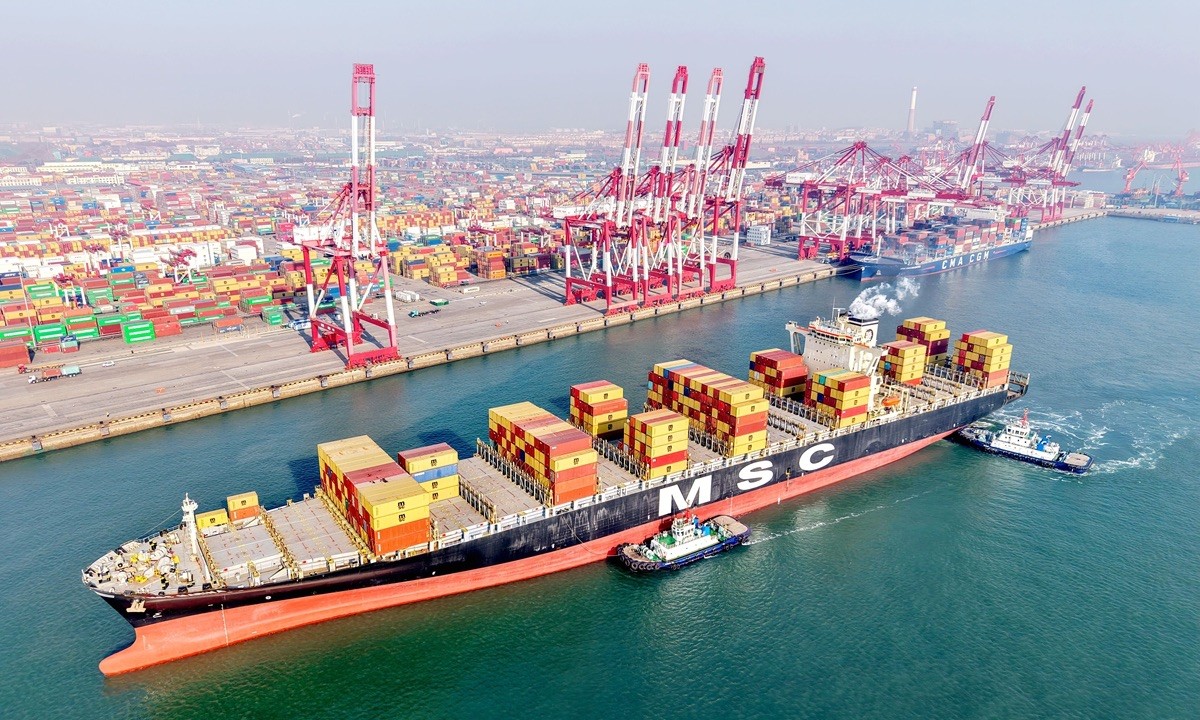
China’s trade momentum gained pace in September – driven by strong global tech demand and a pre-holiday shipping rush ahead of the “golden week” break – logging a monthly high for its trade surplus in 2026 and putting the country on course for another record gap this year. Outbound shipments rose 36.3% year-on-year to USD447.18 billion last month. The figure exceeded a forecast of 25.7% growth from economists polled by financial data provider Wind, and was higher than the previous figure of 25% in August. China also saw imports grow by 31% last month to USD313.65 billion, above the Wind poll’s projections of 23.79% growth. This brought China’s September trade surplus to USD133.53 billion, up from the USD119.1 billion reported in August.
Total trade for the January-September period rose 23.8% year-on-year. “Foreign trade growth in the first three quarters was the fastest in the past five years,” said Wang Jun, Vice Director of the General Administration of Customs, at a press conference. From January to September, China's exports increased by 16.4% year-on-year to CNY23.2 trillion, while imports expanded by 22.3% to CNY16.74 trillion, according to data released by the GAC.
The growth in exports was driven by products in the technology sector, such as chips and electronic components, amid growing global demand for artificial intelligence computing power and electricity infrastructure, Wang said. China is on track to post another record annual trade surplus this year, after last year’s USD1.2 trillion imbalance drew heightened scrutiny from Western trading partners. Its cumulative surplus had already reached USD938.11 billion in the first nine months of 2026, up about 7.2% from the same period last year, Customs data showed. Exports to the U.S. continued to rise against a low base last year, growing 39.56% in September. Chinese exports to the European Union rose 25.25% in September reaching a seven-month high. Exports to members of the Association of Southeast Asian Nations (ASEAN) surged 52.26% year-on-year.
By product, exports of integrated circuits rose just 1% year-on-year in volume terms last month but surged by 136% in value terms, driven by higher prices amid a memory chip shortage fueled by a global AI infrastructure buildout. China’s rare earth exports rose 6.74% year-on-year by volume in September.
The recovery of China-U.S. trade continued in September, with bilateral trade rising 4.1% year-on-year in the first three quarters of 2026. The turnaround from a contraction earlier this year pointed to the resilience of commercial ties between the world's two largest economies, as renewed efforts to stabilize bilateral relations offer a more favorable outlook for trade. Bilateral trade reached CNY3.18 trillion in the January-September period. In the first nine months, China's exports to the U.S. rose 9.8% year-on-year to USD348.2 billion, while imports increased 5.2% to USD114.4 billion. China-U.S. trade contracted 6.6% year-on-year in the first five months before returning to growth of 1.3% in the first eight months, with the increase widening to 4.1% in the January-September period.
Net foreign direct investment (FDI) inflows into China reached the highest first-half level in four years, reflecting growing foreign investor confidence as the Chinese economy shifts toward more resilient growth driven by innovation and domestic demand. China recorded net FDI inflows of USD60.9 billion in the first half of 2026, up 81% year-on-year, according to the latest balance of payments data released by the State Administration of Foreign Exchange (SAFE). “In the first half of 2026, foreign direct equity investment totaled USD63.8 billion, up 55% year-on-year, indicating that FDI inflows into China are stabilizing and gaining momentum,” an Administration official said. Inflows of new capital, which reflect long-term investment intentions, rose 10% to USD43.1 billion in the first half, the official said.
Furthermore, reinvestment of earnings by foreign-invested enterprises in China increased 31%, indicating that they were using more of their earnings to expand investment with a stable willingness to invest and operate here, the official said, adding that “China’s steady expansion of institutional opening-up and improvements to its foreign investment services have helped create a favorable development environment for foreign investors to invest and operate in China”. “Combined with its vast market, comprehensive industrial system and strong supporting capabilities, these advantages have enabled foreign-invested enterprises to earn relatively high returns, consistently ranking among the highest across major economies,” the official said.
New capital contributions by foreign direct investors into high-tech services and manufacturing saw a 61% year-on-year increase in the first half, the State Administration of Foreign Exchange (SAFE) said in the latest balance of payments report, indicating that foreign investors are shifting from seeking the cost and scale advantages of “Made in China” to participating in “Created in China”.