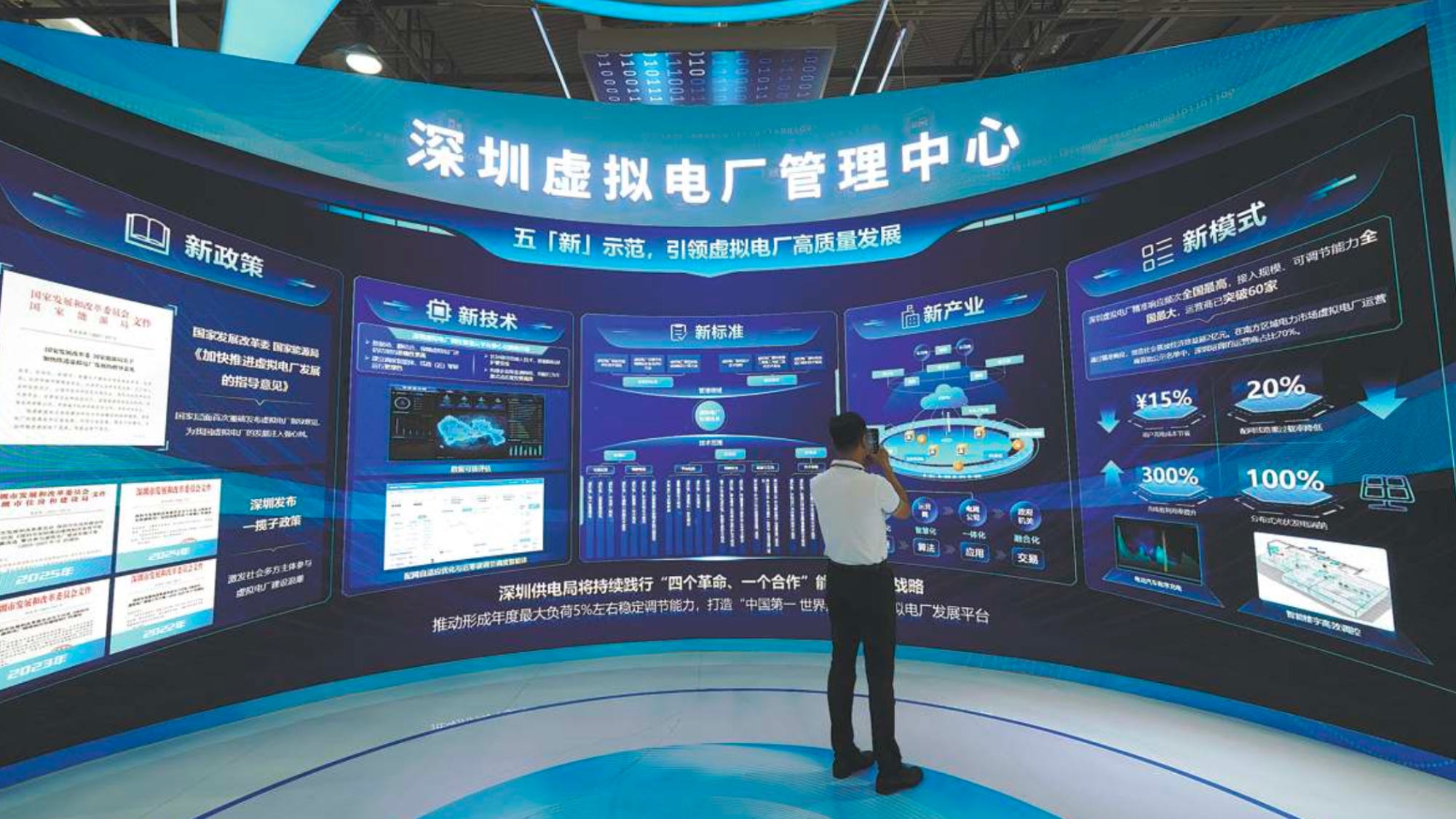
China is accelerating a historic transformation of its massive electricity network, shifting away from a traditional model where power generation passively adjusts to meet demand, and toward a highly intelligent, interactive ecosystem that synchronizes generation, power grids, user loads and energy storage. As the country’s renewable energy installations break records at a breathtaking pace, industry experts and policymakers increasingly view the demand side as the next great frontier for ensuring grid stability and achieving the nation’s ambitious decarbonization goals. The recently released 15th Five Year Plan for New Power System Construction (2026-30) targets a maximum regulation capacity of over 50 gigawatts for virtual power plants (VPPs) by 2030, establishing them as a crucial vehicle for demand-side grid interaction.
Furthermore, the plan mandates the high-level absorption of over 2.8 billion kilowatts of renewable energy by the end of the decade. Unlike conventional facilities defined by physical generators and smokestacks, a VPP is an advanced, cloud-based digital aggregator. Powered by the internet of things (IoT), big data and artificial intelligence (AI), a VPP links and orchestrates thousands of decentralized energy assets, including rooftop solar arrays, battery storage units and electric vehicle charging networks. During periods of peak demand or fluctuating renewable output, the platform can remotely discharge stored power or throttle back consumption in real time, delivering the same grid-balancing capabilities as a traditional peaking power station, but at a fraction of the capital cost and with zero additional carbon emissions.
This structural pivot is born of necessity. As of the end of June, China’s cumulative installed capacity of wind and solar power reached 1.95 billion kW, accounting for roughly 48.3% of the country’s total power generation capacity, according to the National Energy Administration (NEA). However, relying heavily on wind and solar means the power supply is increasingly at the mercy of the weather. “While our green power capacity continues to set new global benchmarks, its inherent weather-dependent traits are becoming glaringly obvious,” said Peng Yuehui, Deputy Director of the Scientific and Technological Research Institute at North China Electric Power University. “Power generation fluctuates significantly, and extreme weather can trigger ‘roller-coaster’ style volatility in daily power supply and demand,” said Peng.
Peng cited a major new energy base in Northwest China as an example. During peak sunlight hours at noon, the facility frequently has to curtail its output by 30% due to a lack of immediate demand or transmission capacity. Conversely, during the evening load peak when the sun sets, the grid faces a 40% power deficit. “The traditional power system operating model is simply no longer sustainable. The intermittency, randomness and volatility of renewable energy pose immense challenges to grid stability, demanding far higher levels of systemic flexibility,” Peng added.
Zhang Jieqing, Chief Representative of the Natural Resources Defense Council Beijing Office, echoed this sentiment, noting that the speed of building system regulation capacity has severely lagged behind the explosive growth of wind and solar installations. “The spatial and temporal mismatch between supply and demand has always existed,” Zhang said. “When renewable penetration was low, the grid could balance itself internally. But as green power becomes the dominant source, relying solely on traditional supply-side adjustments cannot solve the root problem.”
A report released earlier by the NRDC revealed that China’s green commitment and rapidly developing new energy industry are fast-tracking the development of VPPs. As renewable energy makes up an ever-larger share of the power grid, mounting pressure on system flexibility and grid reliability is spurring demand for clean, agile and economically viable new market participants, it said. Compounding this is the steady growth of new electricity demand, the China Daily reports.