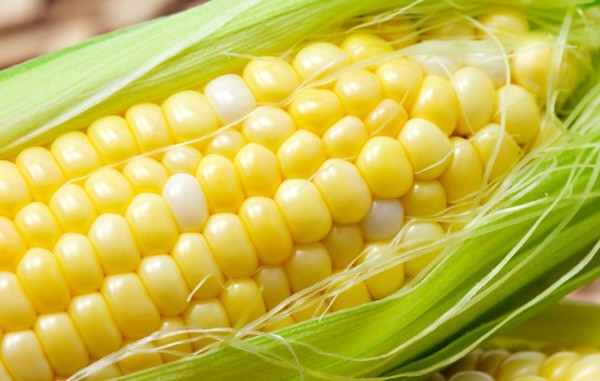
In a move over a decade in the making, China has expanded the commercial adoption of genetic modification (GM) to two staple crops, advancing its plan to ensure food security despite persistent public controversy over the technology. A total of 37 GM corn varieties and 14 GM soybean varieties have been given the green light for commercial planting in a country whose enormous soybean consumption still relies heavily on imports. The Ministry of Agriculture and Rural Affairs announced the approval on October 17. China, which has made food security a top priority as a host of global uncertainties brings the stability of imports into question, previously limited the application of GM technology to papaya and cotton. The decision marks the beginning of a new era for China’s seed industry and is expected to improve self-sufficiency for its 1.4 billion population while moderating a sizable food trade deficit. Approved varieties, which have been bred for stronger herbicide or insect resistance and produce higher yields, can be grown in designated areas after November 15, when solicitation of public comment ends.
Developers of the strains include major domestic seed companies such as Beijing Dabeinong Biotechnology. China has pledged strong support for leading breeders via a 2021 action plan intended to give the industry a boost. Zhu Zhen, Researcher at the China Academy of Sciences’ Institute of Genetics and Developmental Biology, said the approval will speed up development in biotechnology and seed production as the country faces increasing pressure on its food supply thanks to changing dietary structures, global market turmoil and climate shocks. “It wouldn’t be an exaggeration to say it starts a new era for the industry as the technology is now applied to corn and soybean, which are major food crops and important sources for cooking oil,” he said. “We’re seeing a surge in demand for meat as living standards improve, and these crops are also important sources for animal feed.”
However, initial commercial adoption is unlikely to result in immediate large-scale planting and will have a minimal impact on import demand, said Zheng Fengtian, Professor of Agricultural Economics at Beijing’s Renmin University. “It’s not possible to replace all the imports with domestic production,” he said. “We don’t have that much land.” Whether the public will accept this change remains to be seen, he said, as GM food raised safety questions and authorities have been promoting it slowly. But the technology could have strategic advantages that supersede those concerns. “For China, the embracing of GM food is more a preparation for a rainy day,” Zheng said. “If everything’s fine with the United States, then it’s not bad to import. But if it starts using food as a weapon, we have our own option.”
China imported more than 146 million tons of food last year, according to customs data, over 60% of which were soybeans. That meant a net food trade deficit of over 143 million tons. From January to September it imported nearly 78 million tons, mainly from the U.S., but in recent years it has bought more from Brazil as Sino-U.S. ties worsened. High reliance on imports is partly driven by the unwillingness of domestic farmers to grow the crop due to the poor performance of existing varieties, Zheng said. The yield of soybeans planted in China is just 40% of those from the United States or Brazil.
The Chinese government has made heavy investments to enhance seed breeding and improve agricultural efficiency since President Xi Jinping called for the “revitalization” of the industry two years ago. In support of that goal, a seed development firm with registered capital of CNY4 billion was set up last month in Hainan by the State Development and Investment Corporation, China’s state-owned holding company, the South China Morning Post reports.